
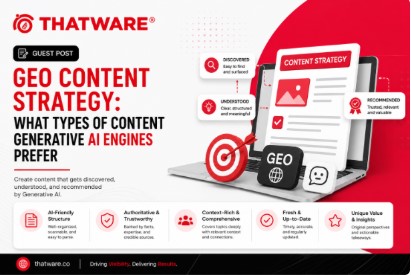
If you’ve spent any time producing content for traditional SEO, you probably have a mental model that looks something like this: find the keyword, match the search intent, hit a word count, get some backlinks. Rinse and repeat. And honestly, that model has worked pretty well for a long time.
Generative AI engines are a different animal. They don’t just retrieve the page that best matches a query — they synthesize information from many sources to construct an answer. Whether your content gets pulled into that synthesis, and how prominently, depends on factors that don’t map neatly onto traditional content strategy.
This isn’t about starting from scratch. A lot of what makes great content great — clarity, depth, genuine usefulness — still applies. But the emphasis shifts in some important ways, and if you’re investing in GEO without adjusting your content approach, you’re probably leaving citations on the table.
The Fundamental Shift: From Ranking to Being Referenced
Traditional content strategy asks: how do I rank for this query? GEO content strategy asks: how do I get referenced when an AI answers this question?
That reframe matters. Pages rank. Ideas, facts, frameworks, and perspectives get referenced. So your content needs to contain things worth referencing — not just keyword signals worth indexing.
Think about what a journalist reaches for when writing a piece on a complex topic. They look for authoritative sources that have articulate, quotable positions. Clear definitions. Original data. Well-reasoned frameworks. Specific examples. That’s the mental model for GEO content. You’re writing for an AI that functions, in some ways, like a very thorough researcher trying to construct a balanced, accurate summary.
Content Types That Consistently Perform
Definitive guides and explainers. AI systems love content that defines and explains — clearly, without hedging unnecessarily, with enough depth to be genuinely useful. If your guide on a topic is the most comprehensive, well-structured explanation available, it becomes a natural reference source. These don’t need to be endlessly long, but they do need to be genuinely complete.
Original research and data. This might be the single highest-leverage content type for AI citations. When you produce original data — surveys, analyses, benchmarks, case studies with real numbers — you create something that AI systems can cite as a source. “According to [Brand]’s research…” is exactly the kind of structure that shows up in AI-generated answers. Data that doesn’t exist anywhere else will be referenced; rephrased statistics that came from someone else won’t carry the same weight.
FAQ and question-format content. AI systems are built to answer questions. Content that directly addresses common questions in your domain — structured clearly, with concise and accurate answers — aligns naturally with how these systems synthesize responses. This isn’t about keyword-stuffed FAQ pages; it’s about genuinely anticipating what people want to know and answering it well.
Comparison and decision-support content. A significant portion of AI queries are decision-oriented — “what’s the difference between X and Y,” “which type of solution is right for my situation.” Brands that produce honest, well-structured comparison content tend to get cited more in these answer types. The key word is honest — AI systems and the humans using them can both tell when a comparison is rigged.
Structural Qualities That Help
Beyond content type, certain structural and editorial qualities make content more likely to be referenced by AI systems.
Clear attribution and authorship. Content authored by named individuals with verifiable expertise signals credibility. An article by “the marketing team” is less compelling than one bylined by a subject matter expert with a real professional profile.
Accurate and verifiable claims. This sounds obvious, but it’s worth stating: AI systems that do retrieval augmentation are essentially fact-checking as they go. Content that makes specific, verifiable claims that hold up under scrutiny builds trust over time. Vague claims and puffery do the opposite.
Well-organized information architecture. Clear headings, logical flow, concise summaries. Content that’s easy to parse programmatically tends to be more extractable — and more extractable content gets referenced more often.
The Role of a Solid GEO Strategy
Executing this well requires more than good writing instincts. It requires understanding the prompt landscape in your category — the specific questions people are asking AI tools, how those questions cluster, and where your brand currently has presence or gaps.
A strong GEO strategy for visibility in generative search maps your content production to that prompt landscape systematically. Which question clusters are high-priority? Which ones have AI answers already dominated by competitors? Where are you currently getting cited, and what’s driving it? These questions should shape your editorial calendar more than keyword volume reports.
This is also where content teams sometimes need to expand their aperture. Traditional SEO content often focuses on bottom-of-funnel, high-intent queries. GEO visibility often requires strong presence at the educational and awareness stages — because that’s where a lot of AI queries live. The executive Googling “how does GEO work” before they know what agency to call is forming opinions that matter. Being cited in that answer is valuable even if it doesn’t show up in your attribution data.
What an AI Search Optimization Agency Actually Does with Content
If you’ve engaged or are considering engaging an AI search optimization agency, their content work should go beyond editorial production. It should include prompt landscape mapping (what questions to target), content gap analysis (what topics your brand should own but doesn’t), entity optimization (making sure your content is properly attributed and structured), and external amplification (getting your content cited and referenced elsewhere).
Content that sits on your website and never gets noticed externally has limited GEO value. The distribution and citation-building side of content strategy — getting other authoritative sources to reference your work — is what transforms good content into AI-legible authority.
A Quick Note on What Doesn’t Work
Keyword stuffing, thin content designed to hit a topic tangentially, AI-generated walls of text that say a lot without saying anything — these approaches are not just ineffective for GEO, they may actively work against you. AI systems are getting better at distinguishing genuine expertise from the appearance of it.
The brands succeeding in AI-driven search are the ones investing in content that would impress a smart, skeptical human reader. That standard, more than any tactical checklist, is the right north star.
GEO content strategy isn’t a departure from good content principles — it’s a return to them. Write things worth referencing. Build expertise worth citing. The rest follows.
