
Personal hygiene and self-care form the foundation of physical health, emotional well-being and everyday confidence. Simple, consistent habits protect against illness, support mental clarity and create a sense of order that carries through the day. Improving these routines does not require dramatic overhauls. Small, sustainable changes often deliver the greatest long-term benefits.
Why Hygiene and Self-Care Matter
Good personal hygiene reduces the spread of germs and lowers the risk of common infections. Handwashing alone is one of the most effective ways to prevent diarrhoeal diseases and respiratory illnesses. Regular bathing, oral care and clean clothing help maintain skin health, prevent odour and reduce the chance of infections. Beyond physical protection, these practices contribute to self-respect and social comfort.
Self-care extends the concept to include rest, movement, nutrition and mental pauses. When basic needs are met consistently, energy levels stabilise, stress feels more manageable and the capacity to handle daily demands improves.
Core Hygiene Habits for Everyday Health
Handwashing remains the cornerstone of personal hygiene. Wash hands thoroughly with soap and water for at least 20 seconds at key moments: after using the toilet, before preparing or eating food, after coughing or sneezing, after handling rubbish or animals, and before and after caring for someone who is ill. Proper technique includes cleaning between fingers, under nails and the backs of the hands.
Daily body cleansing removes sweat, dirt and bacteria. Focus on areas prone to moisture and odour, including underarms, genital areas, feet and skin folds. Use mild soap or body wash and lukewarm water. Frequency can vary with activity level and climate, but regular bathing or showering supports both health and comfort. Dry the skin thoroughly afterwards, especially between toes and in skin folds.
Oral hygiene protects teeth and gums while reducing bad breath. Brush twice daily with fluoride toothpaste using a soft-bristled brush, and clean between teeth once a day with floss or interdental brushes. Replace toothbrushes every three to four months or sooner if bristles become frayed.
Nail care prevents the accumulation of dirt and bacteria. Keep nails trimmed and clean underneath. Facial cleanliness, particularly around the eyes and mouth, helps reduce the risk of infections. Covering coughs and sneezes with a tissue or the elbow limits the spread of respiratory droplets.
Wearing clean clothes and changing undergarments daily further supports hygiene. Clean bedding and towels also contribute to a healthier environment.
Building Supportive Self-Care Practices
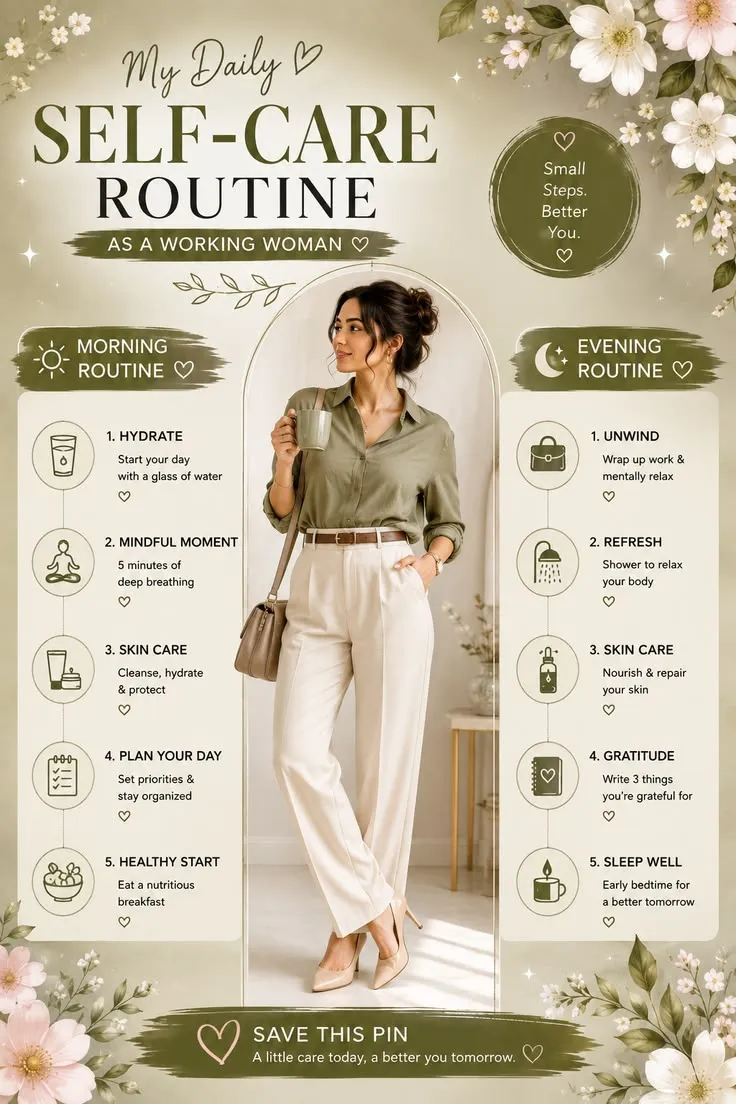
Hydration is a simple yet powerful habit. Drinking water upon waking and throughout the day supports digestion, energy and concentration. Pairing this with a balanced approach to meals helps maintain steady energy.
Movement does not need to be intense. Short walks, stretching or light activity improve circulation and mood. Consistency matters more than duration. Even brief periods of outdoor daylight can support circadian rhythms.
Sleep hygiene underpins overall well-being. Aim for a regular sleep and wake schedule, create a calm environment, and limit screens in the hour before bed. Adequate rest strengthens immunity and emotional regulation.
Small mental pauses also count as self-care. A few slow breaths, a brief moment of gratitude, or stepping outside for fresh air can reset focus during a busy day. These practices require little time yet reinforce a sense of control and calm.
Practical Ways to Strengthen Daily Routines
Anchor new habits to existing ones. Drink water after turning off an alarm. Stretch after brushing teeth. Tidy one surface before leaving a room. Linking actions to established routines increases the likelihood they will stick.
Start small. Choose two or three habits rather than attempting a complete transformation. Track consistency for a few weeks to build momentum. Forgiving occasional lapses prevents discouragement.
Prepare the environment for success. Keep soap and towels accessible, place a water bottle within reach, and set out comfortable clothes for movement. Reducing friction makes healthy choices easier.
Consider the full day. Morning routines set a positive tone, while evening practices support recovery. Consistent bedtime and morning rituals reinforce the body’s natural rhythms.
Adapting Habits to Individual Needs
Hygiene and self-care look different across ages, climates, work demands and health conditions. People with sensitive skin may prefer milder products. Those with active lifestyles may need more frequent cleansing. Menstrual hygiene, hair care frequency and foot care also vary by individual circumstance.
The goal is not perfection but reliable attention to basic needs. When core practices become automatic, they free mental energy for other priorities and create a stable foundation for overall health.
Long-Term Benefits of Consistency
Regular hygiene reduces preventable illness and supports skin and oral health. Combined with rest, movement and simple mental resets, these habits improve daily functioning and resilience. Over time, they contribute to greater confidence, fewer disruptions from minor ailments and a stronger sense of personal agency.
Improving personal hygiene and self-care begins with recognising that small, repeated actions compound. By focusing on handwashing, body and oral care, clean clothing, hydration, movement and restorative rest, most people can meaningfully enhance their daily experience and long-term well-being.
Read more – wishdua.com