
Food waste remains one of the most significant environmental and economic challenges tied to everyday grocery habits. Globally, roughly one-fifth of food available to consumers is wasted at the retail, food service, and household levels, totaling more than one billion tonnes in recent assessments. Households account for the largest share, around 60 percent of that total. In the United States, the average family of four loses approximately $1,500 each year to uneaten food. Beyond the financial cost, discarded food in landfills generates methane, a potent greenhouse gas, while the resources used to produce, transport, and store that food are also lost.
Sustainable grocery shopping addresses both problems at once. By planning carefully, choosing products with lower environmental impact, and using what is purchased more fully, households can reduce waste, lower their carbon footprint, and often save money. The practices are practical and accessible, requiring mostly shifts in habit rather than major lifestyle changes.
Start with Planning Before You Shop
Effective waste reduction begins at home, not in the store. Before heading out, take inventory of the refrigerator, freezer, and pantry. Note items that need to be used soon and build meals around them. This simple step prevents duplicate purchases and helps ensure older food is eaten first.
Create a weekly meal plan that accounts for the number of people eating at home, nights when meals will be eaten out, and realistic portion sizes. Write a shopping list based only on what the plan requires, and stick to it. Shopping when hungry often leads to impulse buys that later go unused. Planning also makes it easier to buy appropriate quantities rather than oversized packages that may spoil.
Shorter, more frequent shopping trips for perishable items can further help. Buying all fresh produce for an entire week increases the chance that some will spoil before it is used. Mid-week top-ups for fruits and vegetables often result in fresher food and less waste.
Understand Date Labels and Store Food Correctly
Confusion over date labels contributes significantly to household waste. “Use by” dates relate to safety and should be respected, especially for highly perishable items. “Best before” or “best by” dates indicate quality rather than safety for many products. Food past its best-before date is often still safe to eat if it looks, smells, and tastes normal. Learning this distinction prevents discarding perfectly good items.
Proper storage extends the life of groceries. Keep the refrigerator at around 4°C and the freezer at −18°C. Place older items at the front so they are used first. Store produce according to its needs: many vegetables last longer in the high-humidity drawer, while certain fruits that emit ethylene gas should be kept separate to avoid speeding the ripening of nearby items. Use airtight containers for leftovers and label them with the date. Freezing surplus food before it spoils is one of the most effective ways to stretch its usefulness. Overripe fruit can become smoothies or baked goods later, and vegetable scraps can be frozen for stock.
Make Smart Choices in the Store
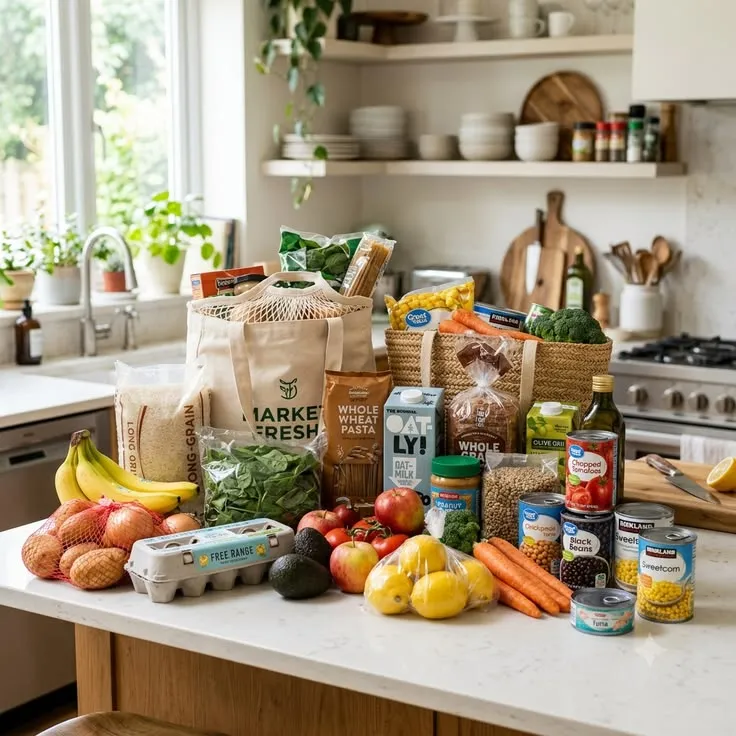
Once in the grocery store or market, several habits support both waste reduction and environmental goals. Choose loose produce over pre-packaged options whenever possible. This allows buying exact quantities needed and avoids unnecessary plastic. Bring reusable produce bags and tote bags to eliminate single-use plastics. Many stores now accommodate bulk bins for grains, nuts, dried beans, and other staples; purchasing only the amount required reduces both packaging and the risk of unused leftovers.
Seasonal and local products generally have a smaller transportation footprint and often taste better because they are harvested closer to peak ripeness. Supporting nearby farms or farmers’ markets keeps money in the community and shortens supply chains. Imperfect or “ugly” produce is equally nutritious and frequently sold at a discount. Buying these items helps reduce waste that occurs earlier in the supply chain when cosmetically imperfect food is rejected.
When selecting packaged goods, look for third-party certifications that indicate meaningful standards. Certified organic products are produced without synthetic pesticides, fertilizers, or genetically modified organisms and follow practices that support soil health and biodiversity. Other useful labels include those verifying fair trade practices or responsible sourcing for specific commodities. Avoid vague claims such as “natural” or “eco-friendly” that lack independent verification.
Use What You Buy Fully and Handle Scraps Responsibly
Creative use of leftovers turns potential waste into additional meals. Transform roast vegetables into a frittata, leftover grains into fried rice, or cooked proteins into soups and tacos. Planning one or two “leftover nights” into the weekly menu makes this habit routine rather than occasional.
For food that cannot be eaten, composting is preferable to landfill disposal. Composting reduces methane emissions and returns nutrients to the soil. Many communities offer curbside compost programs or drop-off sites. Home composting systems work well for fruit and vegetable scraps, coffee grounds, and similar materials.
Build Lasting Habits for Long-Term Impact
Sustainable grocery shopping is most effective when treated as an ongoing practice rather than a temporary project. Keep a running inventory of pantry staples so that shopping focuses on filling genuine gaps. Rotate stock regularly and freeze items approaching the end of their optimal window. Over time, these habits reduce both the volume of food discarded and the amount of packaging brought into the home.
Choosing products with lower environmental impact—local, seasonal, certified organic where it matters most, and minimally packaged—compounds the benefits. The cumulative effect of many households adopting these approaches contributes to lower greenhouse gas emissions, more efficient use of agricultural resources, and greater food security overall.
Reducing food waste and selecting more eco-friendly products does not require perfection. Consistent attention to planning, storage, smart purchasing, and creative reuse delivers measurable results for household budgets and the planet. Starting with a few of these steps and refining them over time creates a more sustainable relationship with the food that nourishes daily life.
Read more – gloryhouseworld.com